

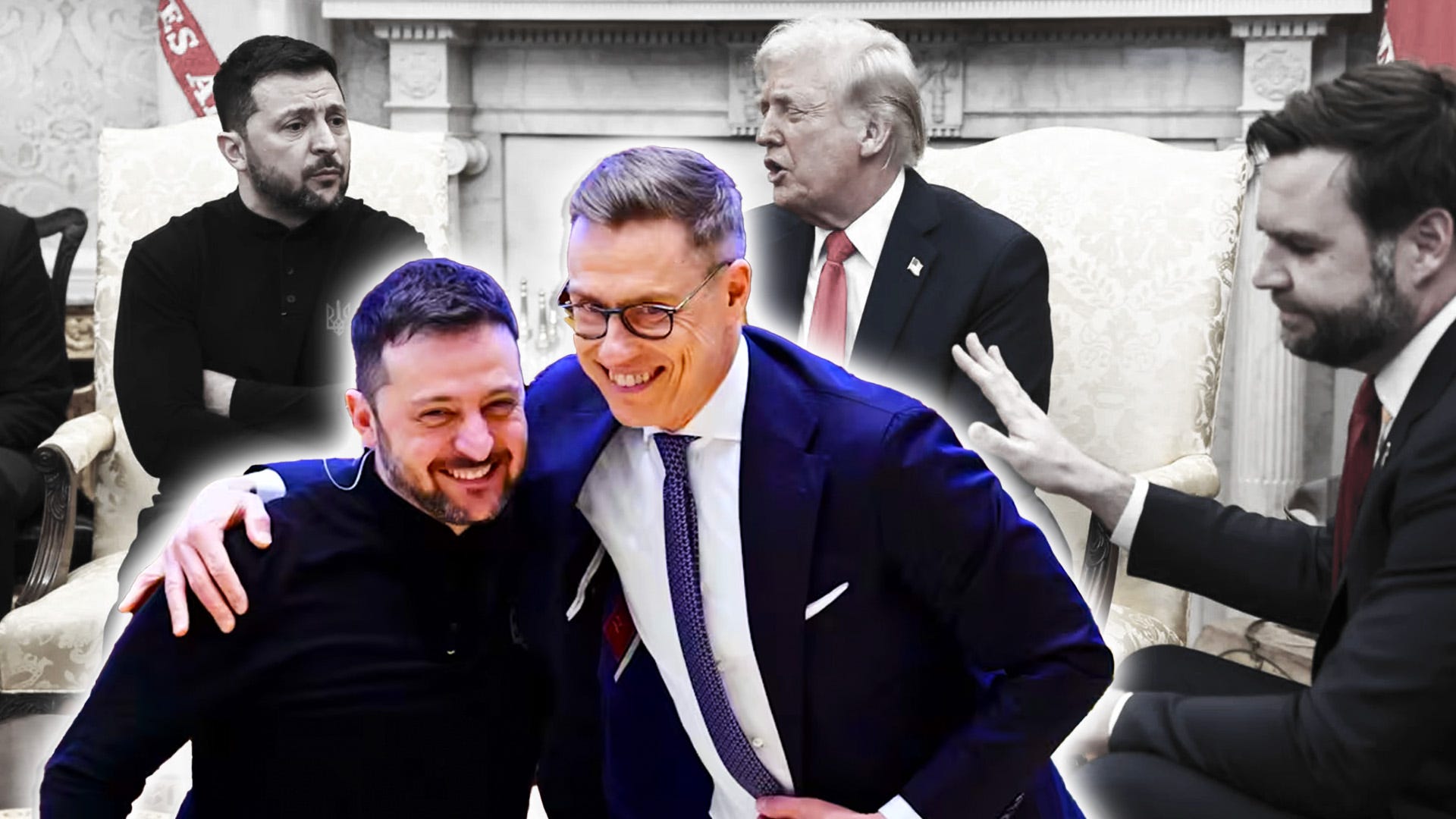
Zelenskyy came to Finland.
I knew because… my bus didn’t arrive when I was trying to get to work.
But on a serious note, the contrast between his meeting with President Stubb and the one with Donald Trump was night and day.
A Changing World Order
The war in Ukraine is not just a regional conflict. It’s a turning point for the world. How it ends will shape the future of NATO, the EU, and the entire geopolitical order. Is America still the leader of the free world? What will become of its global influence? Will the hegemony of the U.S. and Europe evolve—or collapse?
Before the U.S. elections, it felt like something was shifting. Dictators were growing bolder. Terrorism was being applauded—or at least defended—across parts of the world. The world needed leadership. Real leadership.
The American Dilemma
Joe Biden was... old. And honestly, things felt grim. Then Kamala Harris stepped up to run against Trump. But the problem with Harris was that she never said anything of substance, or demonstrated that she knew anything about, well, anything. The Democratic party as a whole had been lost in identity politics for a while, and seemed more focused on appeasing the radical fringe elements instead of listening to the people.
Trump, on the other hand, was a wild card—but confident. He promised to remove identity politics from government. He said what many considered basic, reasonable things, like: “Let’s protect women’s sports.”
And on Ukraine, he made bold promises like: “I’ll end the war in 24 hours.”
Now, sure—most of us knew he was lying, or wildly exaggerating. But he was lying with confidence, and to many Americans, that was more appealing than the alternative.
Even some of us outside the U.S.—myself included—were cautiously optimistic.
Here was someone, imperfect as he may be, who might just be able to lead the world into a better future, if he played his cards right.
Boy, was I wrong.
A Disturbing Shift
Maybe I was naive. But I didn’t expect Donald Trump to come across as surprisingly sympathetic to Russia.
Not just in words, but in actions—and especially in the way he speaks about Putin, versus how he speaks about Ukraine. If you live in Europe, you understand how important the war in Ukraine is—especially for countries quite close to it. Like Finland.
The Oval Office meeting between Trump’s administration and President Zelenskyy sent shockwaves across the world.
It also changed my view of America forever. It made us wonder whose side America is on. A country that prides itself in standing against dictators and standing up for democracy.
There had already been red flags. Trump had called Zelenskyy a dictator—something truly absurd, considering Ukraine is literally defending itself from an actual dictator.
It felt incredibly wrong. We all saw that tweet. It was disheartening. But I tried to brush it off as Trump just being Trump.
Then came the meeting. It started off relatively calm, despite shade being thrown at Zelenskyy for not wearing a suit.
Condescending. Unnecessary.
But I brushed past it again, hoping the actual conversation would be productive.
Boy, was I wrong—again.
The Mineral Deal With No Security Guarantees
The discussion revolved around a potential mineral deal between the U.S. and Ukraine.
I don’t know the full details, but in simple terms, America stood to make a lot of money by mining resources in Ukraine.
Trump claimed it would be a way for Ukraine to “pay back” the billions America had spent—repeating a wildly inaccurate number: $350 billion. A number that is provably false.
But here’s the real kicker: there were no security guarantees in the deal.
Security was simply inferred, not promised.
And Ukraine had good reason to be skeptical—because back in 2022, American companies were already operating in Ukraine when Russia invaded… and that didn’t function as a deterrent to Russia. They did not care.
During the meeting, a reporter asked a simple but critical question: "What if Russia breaks the ceasefire?" Trump's reply was flippant and dismissive: "What if anything? What if a bomb drops on your head now?" He followed up by saying, "They broke ceasefires under Biden because they didn’t respect him. They respect me."
It was a moment that said everything about his approach—not grounded in realism or responsibility, but bravado and personal ego.
The Historical Context
Let’s rewind a bit.
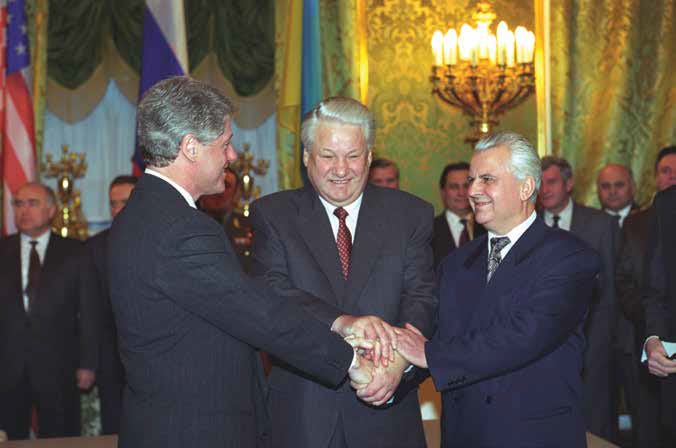
Ukraine, as part of the former Soviet Union, once had nuclear weapons.
In 1994, it gave them up in exchange for a handshake deal of sorts between the U.S., the UK, and Russia. It promised Ukraine its sovereignty.
This agreement—known as the Budapest Memorandum—was designed to make the world safer by reducing nuclear weapons, while protecting Ukraine’s sovereignty. Everything was peachy.
But in 2014, Russia reached out its hand and simply took Crimea.
Claimed it. Annexed it.
And in 2022, as the world knows, Russia launched a full-scale invasion.
This is the context Ukraine lives in today.
The spark that set the meeting ablaze was when JD Vance interjected and claimed that now was the time for “diplomacy.” It wasn’t necessarily what he said that was the problem. It’s what he was implying that frustrated everyone.
He was speaking as if diplomacy hasn’t already been tried—over and over again. As if Ukraine and Russia are somehow equal players in this war. As if Ukraine should be blamed for defending itself against an unprovoked invasion.
That’s why Zelenskyy asked the question that turned the spark into a raging flame:
What kind of agreement can we make with Russia? With Putin?
We want peace. We want to be part of the Western world. This is their war—not ours.
They break every single agreement they make. So what kind of ceasefire—without real security—could ever hold?
And that, my friends, is when everything went crazy.
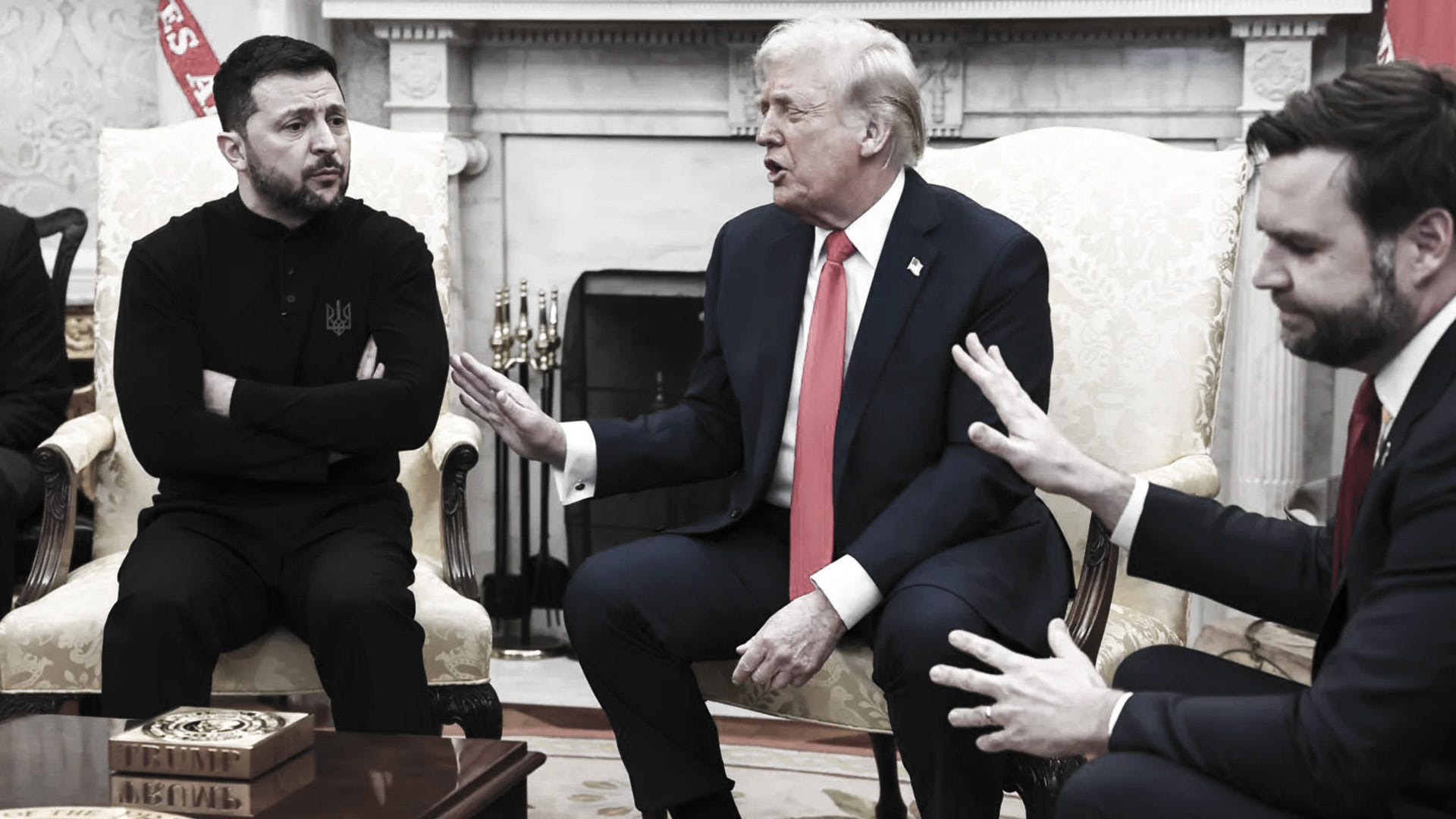
The world watched in horror as JD Vance and Donald Trump shouted down a president fighting for his country against a ruthless dictator. A president who had every opportunity to flee, but instead chose to stay and fight alongside his people. A man who stood for the very values the West claims to defend. And yet, in that room, America belittled him. JD Vance smugly asked when the last time Zelenskyy said "thank you" was. It was a moment that changed everything.
Most of us here in Europe understand something very basic…
Ukraine wants lasting peace.
A peace that will outlive Donald Trump.
Zelenskyy’s frustration—his emotion—is something much of Europe shares.
Because right now, the so-called leader of the free world is willing to condemn everyone except the actual aggressor.
Trump even suggested that Ukraine started the war.
How delusional do you have to be to make such an insane statement?
When that meeting ended, I had a pit in my stomach.
Europe’s Responsibility
Now look—Europe isn’t off the hook here.
For too long, it has relied too heavily on the U.S. for defense, security, and leadership.
This old continent has a choice to make:
It can stop complaining and start leading.
It can invest, innovate, and rise again—if it truly wants to.
Or, it can remain dependent and accept the disrespect being shown to it. But I think things are changing.
That said, that Oval Office meeting was a disgusting stain on America’s image as the leader of the Western world.
Because the U.S. of today appears to be hard on the weak and soft on the strong.
Putin literally turned down Trump’s 30-day ceasefire plan, basically slapping it aside.
And yet, Trump still treats Russia with kid gloves.
There is something deeply broken in this moral compass.
The aggressor is pampered.
The aggressed is blamed. It’s hard to watch.
Finland’s Quiet Leadership
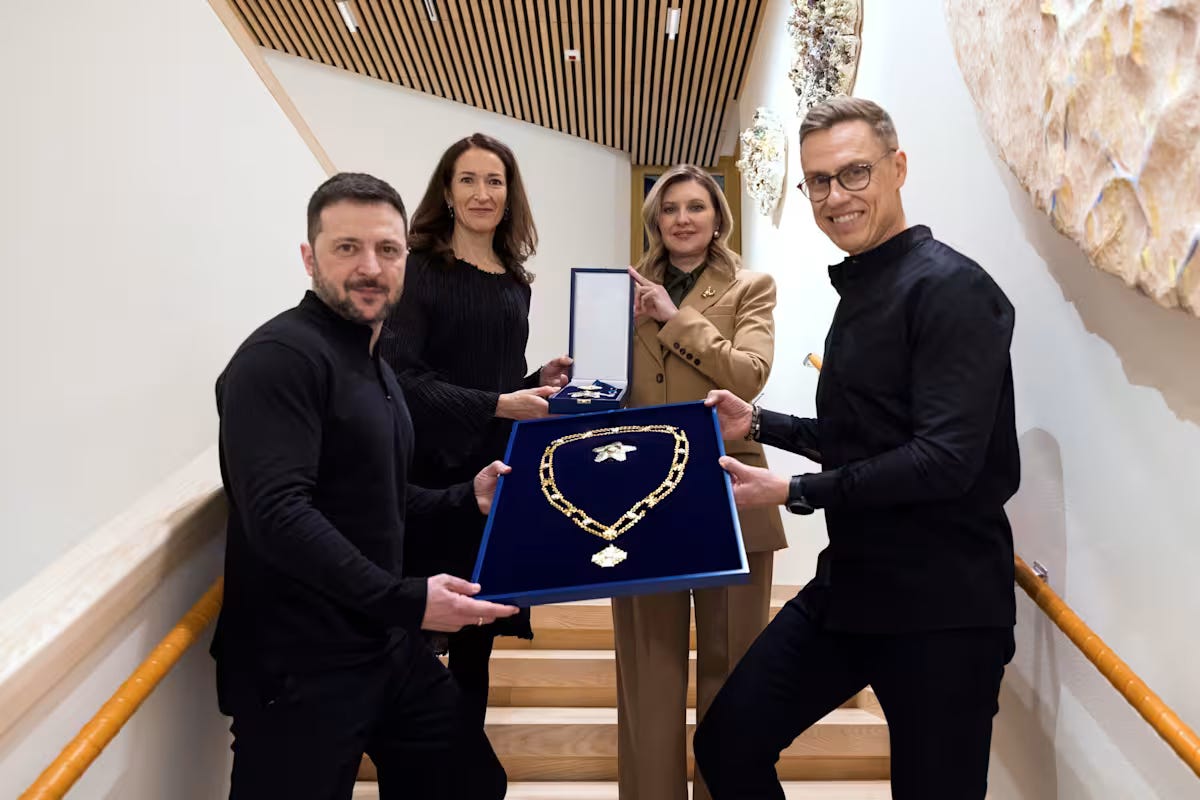
So when Zelenskyy came to Finland and was treated with honour, it said something powerful about who we are.
President Stubb—poised, articulate, and gracious—was a stark contrast to everything we witnessed in that Oval Office.
During the meeting, President Stubb pointed out that Finland, because of its history with Russia, understands Ukraine’s position better than most.
It understands Russian propaganda.
It understands the danger of appeasement.
And it understands what it would mean for the world if the U.S. walked away from its global responsibilities.
After World War II, America helped build a world where dictators couldn’t just grab territory whenever they felt like it.
Despite its flaws, America made world trade safer. It brought some stability.
People trusted its word.
If that trust is gone—what happens next?
Why wouldn’t every country in the world start pursuing nuclear weapons again?
Would that make the world safer?
I don’t think so.
That’s why now, I put my hope in Europe.
It has to rise up.
Not just to protect Ukraine—but to protect the values we all say we believe in.
Thank you for reading! Watch the Youtube video version HERE